The Interplay of Swiss Regulations and Mobile Poker Features That Shape Player Protections
Geschrieben von Ben Vogel · 20.8.2026
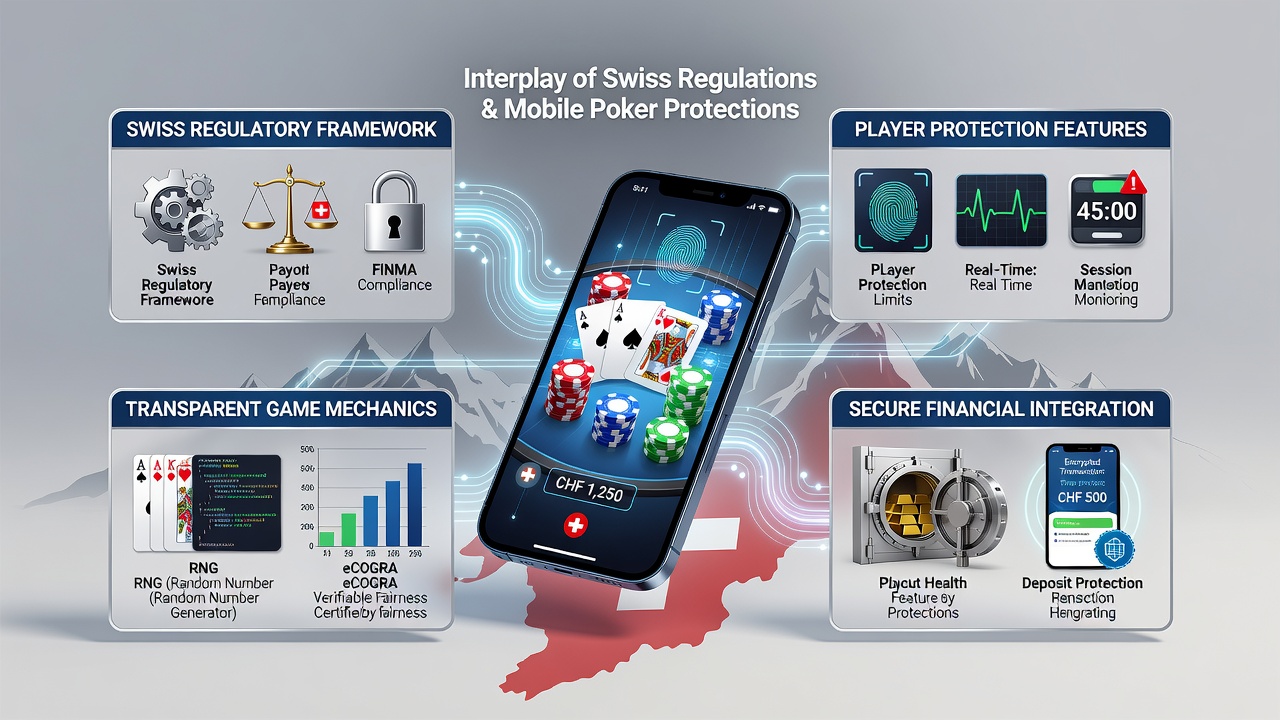
The Interplay of Swiss Regulations and Mobile Poker Features That Shape Player Protections
Swiss federal law establishes clear boundaries for online poker operators while mobile platforms incorporate technical controls that align with those rules and together they create layered safeguards for participants. The Federal Act on Gambling along with its implementing ordinances requires licensed providers to embed player protection tools directly into their applications and operators must demonstrate compliance before they receive approval to offer real-money games to Swiss residents.
Core Elements of Swiss Gambling Oversight
Data from the Swiss Federal Gaming Board shows that licensed mobile poker services must verify user identity through official documents and cross-checks with national databases before any deposits occur and this process blocks access for individuals under 18 while also preventing play from jurisdictions outside the permitted scope. Regulations further mandate that platforms maintain detailed records of betting activity which regulators can audit at any time and the combination of these requirements reduces opportunities for unauthorized participation.
Operators face ongoing obligations to monitor for signs of problematic behavior and they must activate automatic interventions when predefined thresholds are reached. These thresholds cover deposit frequency, session length, and total amounts wagered within a defined period and the system flags accounts for review before further play continues.
Technical Controls Embedded in Mobile Applications
Mobile poker clients integrate features that translate regulatory demands into user-facing functions and examples include mandatory cooling-off periods after extended sessions along with customizable deposit caps that cannot be raised without a separate confirmation step. Researchers at the University of Zurich have examined how these in-app mechanisms interact with Swiss licensing conditions and their findings indicate that the design choices reduce the likelihood of impulsive spending by requiring deliberate user actions to override default limits.

Reality-check notifications appear at regular intervals during play and they display cumulative time spent plus net winnings or losses since the session began. The frequency of these prompts stems directly from licensing conditions that took effect after updates in 2025 and the August 2026 compliance reports confirmed that all active operators had implemented the revised timing intervals without exception.
Data Sharing and Cross-Platform Protections
Licensed Swiss operators participate in a centralized exclusion register that prevents individuals who have self-excluded from one platform from registering on another and this shared database operates under strict data-protection rules set by the Federal Act on Data Protection. Mobile applications connect to the register in real time during account creation so attempts to circumvent a ban trigger immediate rejection and the process leaves an auditable trail for supervisory review.
Payment providers working with Swiss poker apps must route transactions through systems that apply additional verification layers and these steps align with anti-money-laundering provisions contained in the same federal framework. Transaction monitoring algorithms flag unusual patterns and they halt processing until staff complete manual checks required by regulation.
Enforcement Mechanisms and Compliance Reporting
Annual audits conducted by independent testing laboratories verify that mobile features function as specified and reports submitted to the Swiss authorities detail any deviations along with corrective actions taken. Figures released in mid-2026 showed full adherence across all licensed platforms with zero instances of non-compliant software remaining in production environments. The interplay between statute and software therefore produces measurable outcomes that regulators track through quantitative indicators rather than subjective assessment.
Conclusion
Swiss regulations set mandatory standards that mobile poker applications must meet while the technical architecture of those applications supplies the practical tools that make compliance possible. The resulting system combines statutory requirements with automated controls to maintain consistent player protections across devices and the framework continues to evolve through periodic regulatory updates that operators implement via software revisions. Observers note that the structure provides a working model of how legal mandates and digital design can reinforce each other without relying on voluntary measures alone.