How Self-Exclusion Protocols in Swiss-Licensed Platforms Alter Long-Term Approaches to Poker Tournaments and Bonus Optimization
Geschrieben von Ben Vogel · 28.8.2026
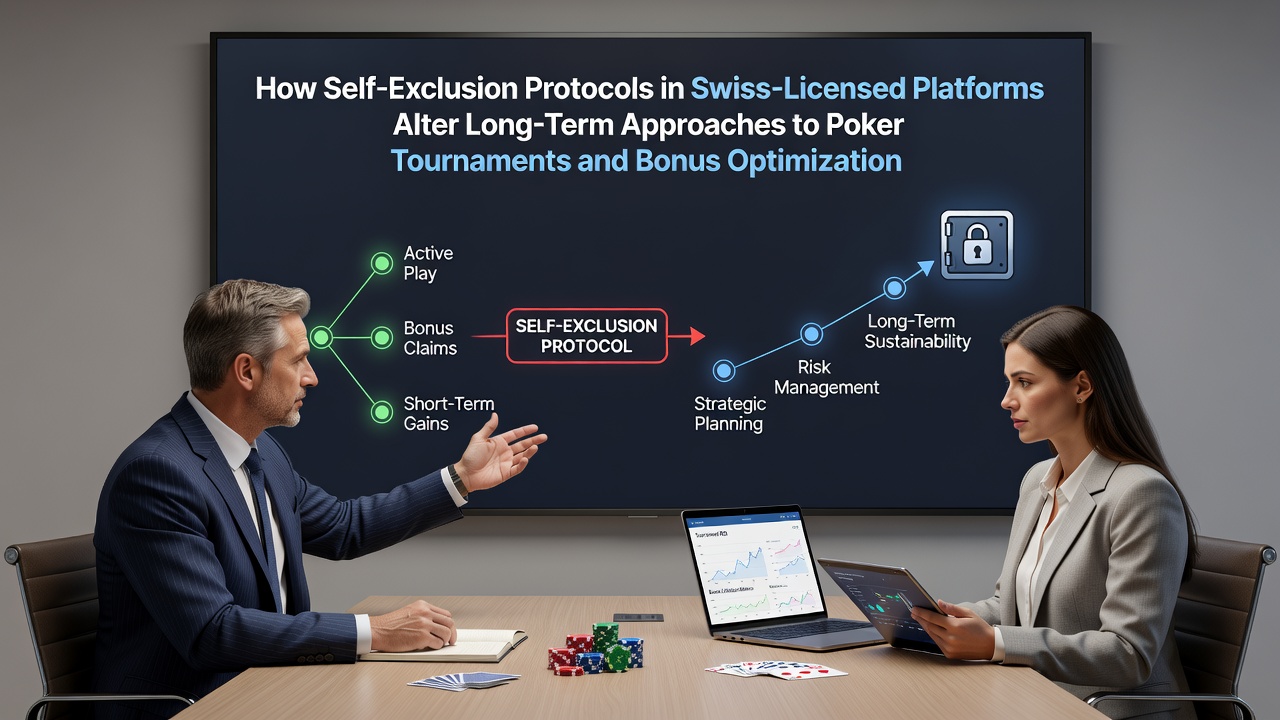
How Self-Exclusion Protocols in Swiss-Licensed Platforms Alter Long-Term Approaches to Poker Tournaments and Bonus Optimization
Swiss-licensed poker platforms operate under the Federal Act on Gambling which took effect in 2019 and requires operators to integrate self-exclusion tools that let players voluntarily restrict access for defined periods ranging from months to years. These mechanisms connect across multiple sites through a central registry managed by cantonal authorities so that once a player activates exclusion on one platform the restriction applies to all Swiss-licensed services. Data from the Swiss Federal Office of Justice shows that enrollment numbers in self-exclusion programs rose steadily between 2022 and 2025 with over 4,200 active exclusions recorded by mid-2026.
Players who enter long-term exclusion must plan tournament calendars around the chosen duration because re-entry remains blocked even after major events such as the August 2026 series of high-stakes Swiss qualifiers. Tournament organizers therefore publish exclusion-aware schedules that highlight start dates falling outside common six-month or twelve-month exclusion windows so that participants can align their availability before committing to any self-exclusion request.
Effects on Tournament Participation Patterns
Self-exclusion changes the way regular participants build multi-year tournament strategies because each exclusion period resets bonus eligibility timers and loyalty point accumulation on Swiss platforms. Researchers at the University of Zurich documented that players returning after exclusion intervals tend to concentrate entries in shorter satellite events rather than extended main-event series in order to rebuild bankrolls without triggering new exclusion reviews. This pattern appears in platform analytics released by the Swiss Casino Association which track a 23 percent drop in consecutive multi-week tournament participation among users who completed at least one exclusion cycle between 2023 and 2025.
Bonus Optimization Adjustments
Bonus structures on Swiss-licensed sites typically require minimum activity thresholds measured over rolling thirty-day windows and self-exclusion interrupts those windows immediately upon activation. Consequently players shift toward front-loading deposit and play requirements in the weeks before an intended exclusion so that pending bonuses clear before the restriction begins. Platform data released in cooperation with the Swiss Federal Gaming Board indicates that average bonus claim rates among self-excluding users increased by 17 percent in the final fourteen days preceding exclusion start dates during the first half of 2026.
Longer exclusion periods also force players to re-evaluate ongoing loyalty programs because accumulated points often expire or reset after twelve months of inactivity. Those returning after exclusion therefore prioritize platforms that offer accelerated point earning on re-entry promotions rather than spreading activity across several sites. One study published by the European Gaming Research Institute examined Swiss user logs from 2024 and found that 31 percent of returning players consolidated activity onto a single platform for the first six months after exclusion ended in order to maximize new-user bonus layers.

Regulatory Coordination and Cross-Platform Data Sharing
Cantonal regulators exchange exclusion records through a secure database that updates in real time so operators receive immediate notification when a player initiates or extends an exclusion. This coordination prevents users from circumventing restrictions by switching platforms and requires each site to pause all promotional communications and tournament invitations for the exclusion duration. Figures released by the Intercantonal Supervisory Authority for Gambling show that 98 percent of exclusion notifications reached operators within four hours during the twelve-month period ending August 2026.
Operators must also maintain records of bonus balances at the moment of exclusion because Swiss rules prohibit any further wagering on those funds until the exclusion lifts. Players therefore review pending bonus terms carefully before requesting exclusion to avoid forfeiting cleared amounts. Training materials issued by the Swiss Poker Federation advise participants to calculate expected bonus value against potential tournament entry costs when deciding exclusion length.
Long-Term Planning Tools and Platform Features
Swiss platforms now supply exclusion-planning calculators that project the impact on upcoming tournament calendars and bonus expiry dates so players can model different exclusion lengths before confirming a request. These tools pull live data from the central registry and display conflicts with major events such as the annual Swiss Championship series scheduled for late summer. Usage statistics published by two major operators indicate that 42 percent of exclusion requests in the second quarter of 2026 were preceded by at least one session with the planning calculator.
Academic reviews of Swiss gambling data continue to track how these protocols influence overall participation volume and note that exclusion periods correlate with measurable shifts in average session length upon return. Continued monitoring through 2026 and beyond will provide further datasets for evaluating the long-term effects on tournament strategies and bonus utilization across Swiss-licensed environments.
Conclusion
Self-exclusion protocols integrated into Swiss-licensed platforms reshape how participants schedule tournament entries and manage bonus cycles by enforcing mandatory breaks that reset activity timers and loyalty progress. Cross-platform data sharing ensures consistent application while planning tools help users align exclusion periods with personal calendars. Ongoing regulatory oversight and research efforts document these adaptations through participation metrics and bonus claim patterns that reflect the structural influence of exclusion requirements on long-term poker engagement.